Welcome to Top Tech Questions. One of our favorite forms of reader communication is tech questions. Our Top Tech section is a place where you ask what’s on your mind, and we answer. Send us an email at [email protected] and ask away!
Fuel isn’t getting any cheaper, and more and more people are noticing that fact. While it’s led to a lot of cool new innovative trucks (like the Ram 1500 EcoDiesel and the upcoming Nissan Titan), it’s also led to a lot of questions concerning mileage. Here are just a few.
Question: For all of you who own 6.4L Ford Power Strokes, are any of you guys getting decent mileage? I keep hearing from everyone what fuel hogs these engines are. Is anyone getting more than 16 mpg on a consistent ba- sis? If so, what are the changes and modifications that made the biggest difference?
Ed Sanchez
via forums.dieselpowermag.com
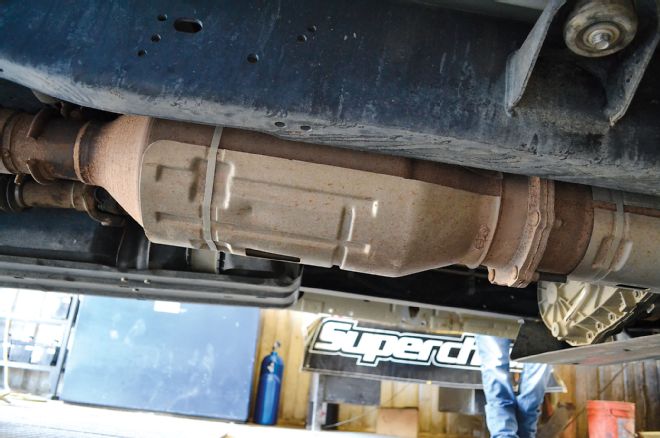 | Most 6.4L Ford Power Strokes get decent mileage, but decent becomes great when the factory DPF is deleted. Unfortunately, doing so violates a state or federal law in most areas.
Answer: We doubt Ford knew the monster it was creating back when it released the 2008 Ford Super Duty with the 6.4L Power Stroke engine. The truck was equipped with such niceties as compound turbochargers, a high-flowing fuel system, and a stout transmission that could handle gobs of torque and horsepower. In addition to all the high-tech horsepower stuff, however, there was also a new emissions system, complete with a diesel particulate filter (DPF) that needed to be constantly cleaned of soot that would accumulate in the filter. For Ford owners, the issue was in how the particulate filter was cleaned. Every few hundred miles or so (sooner in some cases), the filter would need to be cleaned, and the engine would need to go into “regeneration” mode, where it would burn off the excess soot via very high exhaust gas temperatures. The engine would accomplish this by injecting fuel very late in the injection cycle and opening the vanes on the turbocharger, resulting in a drop in boost and a lot of heat out of the exhaust. During regeneration, the engine can sustain an EGT of 1,200 degrees or more for at least 20 minutes, which is hot enough to burn off the caked-on soot.
The problem for 6.4L owners was that the extra fuel used to burn off all the soot used up a lot more fuel than owners anticipated. In nonregen mode, a stock 6.4L is a highly efficient truck and can get around 18 to 19 mpg cruising down the highway. During regeneration, mileage would drop to 9 to 11 mpg, lead- ing to a pretty crummy average. Soon after the 6.4L was released to the public, folks realized huge mileage gains could be made by avoid- ing regeneration mode, which involved removing the factory DPF. Fuel economy took large jumps without the DPF, and with added tuning 12-to-14-mpg combined averages turned into 16 to 18 mpg. At the same time, tuners started taking advantage of the engine’s compound turbos and good fuel system and bumping up the power. First came some 450hp tunes, then the 500hp barrier was broken, and eventually tuners were getting as much as 550 to 570 hp out of a truck that was stock other than computer tuning and the lack of a DPF.
With the enticement of turning a moderately fast truck into a rocket ship, along with a 20 to 30 percent improvement in fuel economy, the aftermarket jumped on the DPF-delete band- wagon, and many aftermarket companies offered software that would allow truck owners to remove the DPF, gain fuel economy, and boost power to ludicrous levels. Unfortunately, these types of modifications quickly got the attention of government agencies like the California Air Resources Board (CARB) and the Environmental Protection Agency (EPA), which didn’t like seeing their manufacturer-mandated emissions equipment being unceremoniously ripped off new production vehicles. So, over the next few years, the EPA and CARB went after the manufacturers of such emissions-deleting products, suing them for hundreds of thousands of dollars in damages.
So now, even if you live in a state or country that has little emissions regulations, finding a way to improve mileage and power will be difficult. While there are tunes that allow you to leave the emissions equipment intact, there’s currently nothing we know about that can give the 4- to 5-mpg boost many enthusiasts have previously heard about.
| Most 6.4L Ford Power Strokes get decent mileage, but decent becomes great when the factory DPF is deleted. Unfortunately, doing so violates a state or federal law in most areas.
Answer: We doubt Ford knew the monster it was creating back when it released the 2008 Ford Super Duty with the 6.4L Power Stroke engine. The truck was equipped with such niceties as compound turbochargers, a high-flowing fuel system, and a stout transmission that could handle gobs of torque and horsepower. In addition to all the high-tech horsepower stuff, however, there was also a new emissions system, complete with a diesel particulate filter (DPF) that needed to be constantly cleaned of soot that would accumulate in the filter. For Ford owners, the issue was in how the particulate filter was cleaned. Every few hundred miles or so (sooner in some cases), the filter would need to be cleaned, and the engine would need to go into “regeneration” mode, where it would burn off the excess soot via very high exhaust gas temperatures. The engine would accomplish this by injecting fuel very late in the injection cycle and opening the vanes on the turbocharger, resulting in a drop in boost and a lot of heat out of the exhaust. During regeneration, the engine can sustain an EGT of 1,200 degrees or more for at least 20 minutes, which is hot enough to burn off the caked-on soot.
The problem for 6.4L owners was that the extra fuel used to burn off all the soot used up a lot more fuel than owners anticipated. In nonregen mode, a stock 6.4L is a highly efficient truck and can get around 18 to 19 mpg cruising down the highway. During regeneration, mileage would drop to 9 to 11 mpg, lead- ing to a pretty crummy average. Soon after the 6.4L was released to the public, folks realized huge mileage gains could be made by avoid- ing regeneration mode, which involved removing the factory DPF. Fuel economy took large jumps without the DPF, and with added tuning 12-to-14-mpg combined averages turned into 16 to 18 mpg. At the same time, tuners started taking advantage of the engine’s compound turbos and good fuel system and bumping up the power. First came some 450hp tunes, then the 500hp barrier was broken, and eventually tuners were getting as much as 550 to 570 hp out of a truck that was stock other than computer tuning and the lack of a DPF.
With the enticement of turning a moderately fast truck into a rocket ship, along with a 20 to 30 percent improvement in fuel economy, the aftermarket jumped on the DPF-delete band- wagon, and many aftermarket companies offered software that would allow truck owners to remove the DPF, gain fuel economy, and boost power to ludicrous levels. Unfortunately, these types of modifications quickly got the attention of government agencies like the California Air Resources Board (CARB) and the Environmental Protection Agency (EPA), which didn’t like seeing their manufacturer-mandated emissions equipment being unceremoniously ripped off new production vehicles. So, over the next few years, the EPA and CARB went after the manufacturers of such emissions-deleting products, suing them for hundreds of thousands of dollars in damages.
So now, even if you live in a state or country that has little emissions regulations, finding a way to improve mileage and power will be difficult. While there are tunes that allow you to leave the emissions equipment intact, there’s currently nothing we know about that can give the 4- to 5-mpg boost many enthusiasts have previously heard about.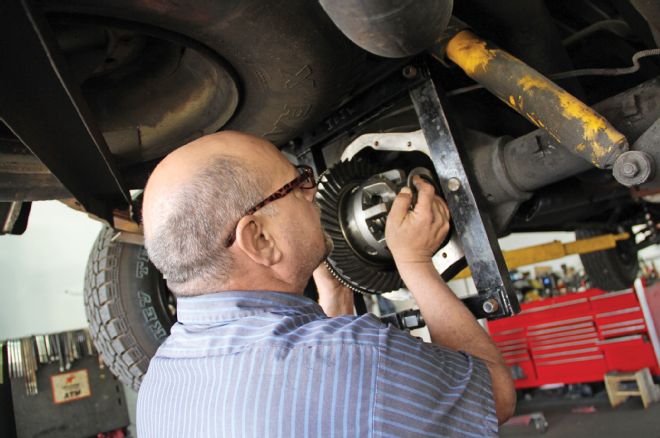 | The new Ram 1500 EcoDiesel trucks are flying off dealer lots, indicat- ing the public will indeed pay a premium for a diesel ½-ton.
TOO GOOD TO BE TRUE?
| The new Ram 1500 EcoDiesel trucks are flying off dealer lots, indicat- ing the public will indeed pay a premium for a diesel ½-ton.
TOO GOOD TO BE TRUE?
Question: I have always driven a gas truck, and the new ½-ton diesel Ram is offering has me thinking about switching. I’m interested in the truck mainly for fuel economy and light towing, and I was wondering if it is really possible that these things will get 30 mpg on the highway? I don’t want to buy one and then be disappointed with the mileage.
Greg Smith Sherman Oaks,
California
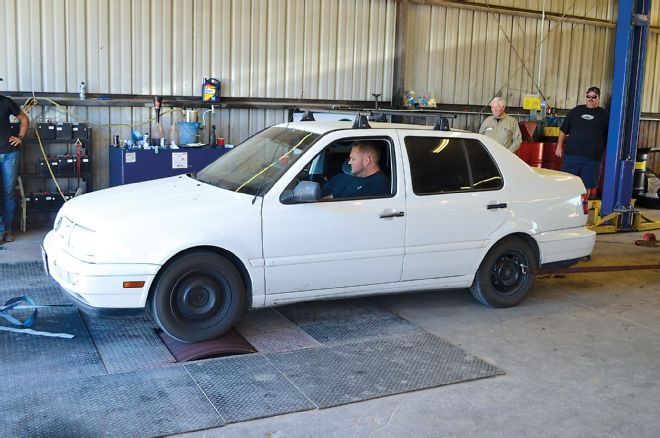 | While it’s not a powerhouse, the Volkswagen Jetta is quite a good diesel car option to buy -- and it gets spectacular mileage.
SWAP SUGGESTION
| While it’s not a powerhouse, the Volkswagen Jetta is quite a good diesel car option to buy -- and it gets spectacular mileage.
SWAP SUGGESTION
Question: Diesel engine swaps in trucks seem to be somewhat popular, but what about cars? Why don’t more people put diesel en- gines in cars? It seems like you could get some great mileage with a lightweight diesel car.
Michael Barcellos Hanford,
California
| For play-type trucks, we have no problem recommending a Detroit Locker for street use, similar to the unit that was installed a while back on this ’89 Dodge. If you take it easy around corners, you’ll barely know it’s back there.
DIFFERENTIAL TREATMENT
Question: I’m looking at buying some sort of limited-slip device for my diesel truck, as I will be towing. The last thing I want to happen is to get stuck with a trailer hooked up and only have one tire spinning. What kind of limited-slip, positraction, or locking differential would you recommend? Nathan Johnson Mazon, Illinois
Answer: It really makes no difference whether you have a Ford, Dodge, or GM truck. The factory two-wheeled traction devices actu- ally work quite well in off-road or slippery conditions. However, if your truck came from the factory with an open differential, there are times when only one wheel will get traction. And in even worse, muddy, or rainy conditions, the rear differential will send all the power to the wheel that is spinning. Fortunately, the aftermarket has many solutions to remedy this problem. Classic positraction units (like the type that came in older muscle cars) have clutches that engage and keep both tires moving in the same direction, except when you’re turning corners (the clutches aren’t engaged, and that allows one tire to turn at a different speed than the other). Another type of locking differential is a helical gear positraction, which uses a gear drive (no clutches) to engage both wheels in situations that require traction. Next up is a locker, which is a very strong and aggressive way to lock both sides of the differential. A locker has teeth that engage and form a very solid lock on both axles, yet when cornering, a spring plate is used to disengage the teeth and allow the differential to function as an open unit. There are also E-lockers, which can be engaged or disengaged electronically to provide the driver with full control over when and where the rear end is locked. Finally, there’s a device called a spool, which most commonly bolts to the ring gear and physically locks both axles together so they’re both turning the same speed, all the time. When looking at these numerous options, the most important thing to consider is how often the truck will be making sharp turns. A positraction that is set up tightly, or a locker under power oftentimes will not unlock when turning corners. In wet weather, this can be especially dangerous, as the rear end can slide out and the truck can get sideways. Since a lot of turning is involved with towing, we’d recommend something like a Detroit Truetrac (he- lical gear) or E-Locker for your application. Both function virtually the same way an open differential does (when it’s not engaged) yet provide plenty of traction under power. If you do go with the less expensive, worm-gear posi, note that some application of the brakes may be required in very slippery conditions (like snow or ice) to engage both wheels to turn.Question: I’m looking at buying a stock 2005 Ford Excursion with 114,000 miles on it, and I need some advice. I was think- ing of adding an air intake and perhaps a water-methanol injection kit, along with head studs, EGR, and an SCT programmer. I’m assuming I’ll also have to beef up the transmission and was looking for advice on that. I was also thinking of adding airbags, but the main thing I’ll be towing is a dirt bike
trailer that weighs about 1,800 pounds, so I wasn’t sure I needed it. Any advice you have would help. Thanks. Robert Shrader
via email