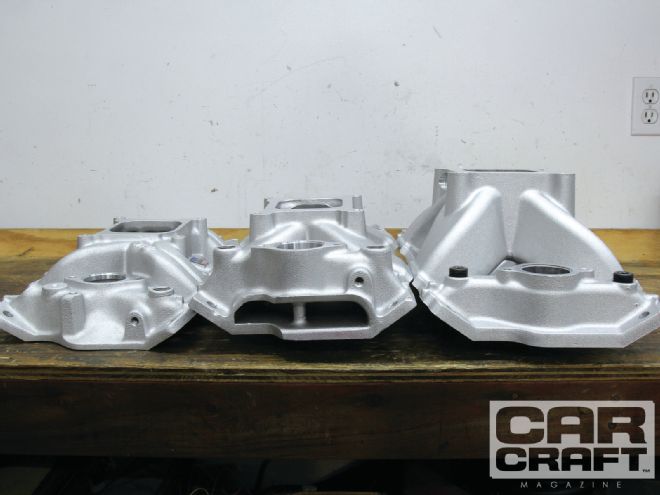
One of the most difficult stories to do in the performance-magazine world is a direct component comparison. With any head-to-head comparison, there are going to be winners and losers. It's human nature to want to simplify a complex issue, such as the comparison of 19 different intake manifolds. When it comes to dyno testing, we naturally gravitate toward that romantic peak-horsepower number. The problem with picking a winner using a single test parameter—in this case, peak horsepower—is that one evaluator is rarely the best or only factor when making a decision on the "best." We believe choosing an intake manifold, or any high-performance engine component, is a complex decision based on a multitude of important factors, so we tried to cover all those factors with this test—as with all of Car Craft's most recent comparison tests, such as the small block Chevy (Sept. '12) and small block Ford (Feb. '13) head tests.
For this latest adventure, we assembled 19 small block Chevy single-plane intake manifolds and ran them all across a 550hp, 406ci small block Chevy. But that was just the start. We measured carb pad height because the manifold has to be able to fit under your hood. We measured plenum depth because that's important for making good power. We've also calculated average torque between 3,500 and 6,500 because that is the rpm band where these engines will spend the majority of their time during a quarter-mile run. We think average torque is the most important factor that we measured in this test. You will get tired of hearing that in this story because that's the hammer we're bringing. Apply a higher average torque, and it will accelerate any vehicle quicker. You might have a manifold that makes good peak horsepower, but if it loses torque in the middle rpm band, the peak-horsepower number is not nearly as important as the average power. The only instance where peak horsepower is really critical is if you have a close-ratio, eight-speed trans that can keep the engine within 1,000 rpm of its peak-horsepower rpm, but since we're not talking about Formula 1 here, that isn't really relevant to the average car crafter's car. So if you only take one thing away from this story, burn average torque into your memory bank.
The Test Engine
We wanted a stout engine capable of making good power to ensure that each manifold would be pushed to give its best. We decided to resurrect our 400ci small block Chevy that first appeared in the May '11 issue ("Build a 400ci Torque Monster for $2,500"), followed by its redemption story "Build Big-Hammer Power" in the Dec. '11 issue. We like to name our engines because it's easier keep them all straight, so this 406 is now dubbed Rodney, as in Dangerfield, because until now it has never received any respect. But after this marathon flogging, Rodney has earned his walkin' papers, as he endured us beating the snot out of him for more than 100 power pulls over four days, with never a whimper.
You may recall that Rodney spins an internally balanced 4340 Scat steel crank, Scat I-beam rods, and a set of Icon forged pistons. We upgraded the heads to a pair of TFS Super 23 aluminum castings to ensure we got the most out of each intake. The heads feature a 215cc intake port with 2.08/1.60-inch stainless-steel valves and roller springs capable of controlling the mechanical roller cam. The cam we chose is a Crane with sufficient specs to push the peak-rpm point up to 6,500 rpm but is still suitable for the street. We also added a set of Crane Gold 1.5:1 roller rockers and proper-length Crane pushrods to ensure a stable valvetrain. The point was to make the engine dead-reliable. Compression ended up at 10.1:1, which allowed us to run this engine on pump gas, though we ran Rockett Racing fuel to ensure consistent performance. We also wanted a big enough carburetor that it would not be a restriction, so we selected one of Holley's new Ultra HP 850-cfm carburetors that offered reliable fuel mixing and excellent consistency throughout the test. Only a few intake manifolds required mixture adjustments, and using an MSD crank trigger unit and distributor, we kept the timing rock-solid at 36 degrees so we wouldn't have to worry about resetting ignition timing each time we removed the distributor to swap an intake.
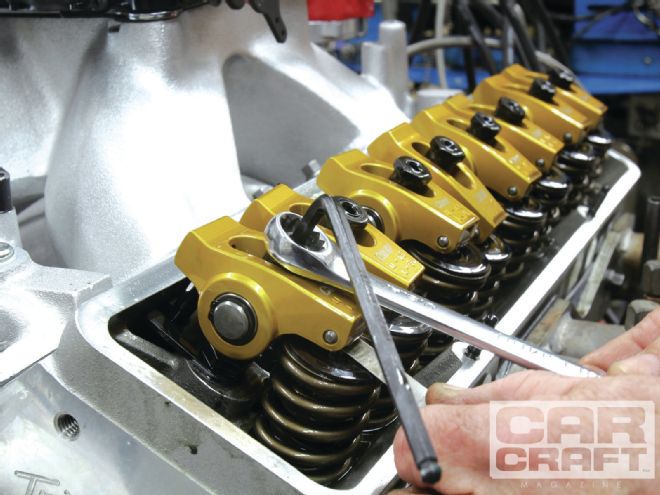 With the engine reassembled, we set the lash on the 1.5:1 Crane Gold roller rockers to 0.017 inch with the engine hot, and we were ready to make some noise.
Cam Specs
Crane Mechanical Roller || PN 118741 Duration at .050 Valve Lift Lobe-Separation angle (Degrees) (Inches) (Degrees) Intake 248 0.630* 106 Exhaust 256 0.630**This is gross lift. We set the lash at 0.17 inch, which we subtracted from the gross lift number to produce a net lift of 0.613 inch.
The Manifolds
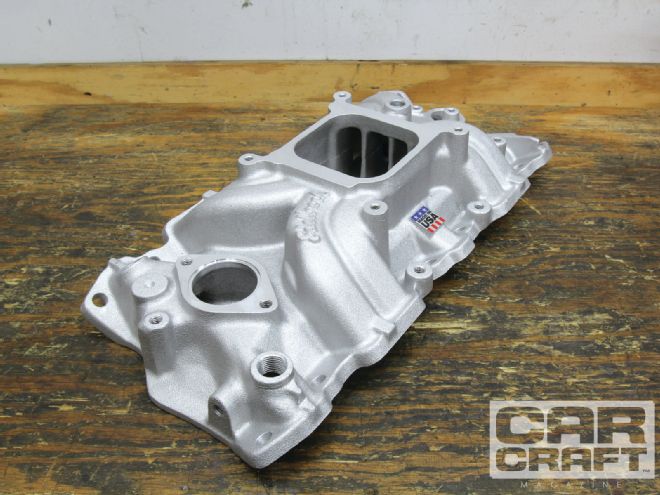
Edelbrock Torker II
The Torker II lives up to its name with good torque below 4,600 rpm. After that, its subdued carb height hurts horsepower. As one of the shortest manifolds in the test, it offers good potential in low hood applications.
 PN
5001
Price
$149.95
Peak HP
492 at 6,000
Peak TQ
501 at 4,400
Average TQ
466.5
Carb Pad Height
4.55
Plenum Depth
3.38 inches
PN
5001
Price
$149.95
Peak HP
492 at 6,000
Peak TQ
501 at 4,400
Average TQ
466.5
Carb Pad Height
4.55
Plenum Depth
3.38 inches
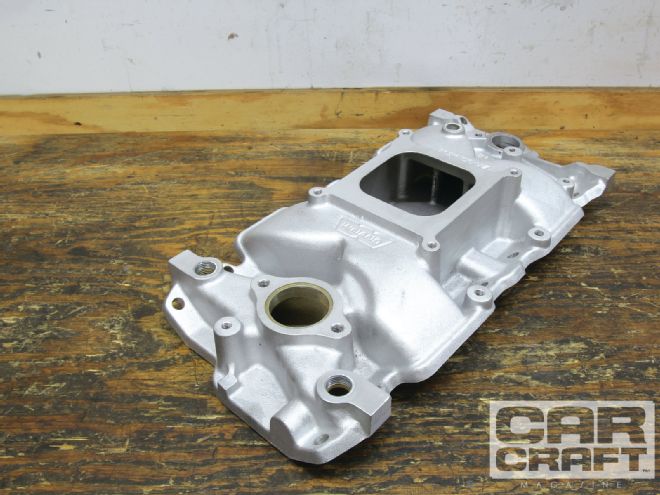
Weiand X-CELerator
As this was the shortest intake in the test, we were surprised it achieved 505 peak horsepower. It also managed to make an average of 472 lb-ft of torque, which is respectable.
 PN
7547-1
Price
$165.95
Peak HP
505 at 6,200
Peak TQ
502 at 4,500
Average TQ
472.0
Carb Pad Height
4.00
Plenum Depth
2.95 inches
PN
7547-1
Price
$165.95
Peak HP
505 at 6,200
Peak TQ
502 at 4,500
Average TQ
472.0
Carb Pad Height
4.00
Plenum Depth
2.95 inches
Edelbrock Super Victor 23
The results for this manifold were puzzling, since it lost more than 10 lb-ft of torque in the midrange compared with many of the other manifolds. While the Super Victor 23 generated good peak horsepower for its height, its low average torque is a detriment.
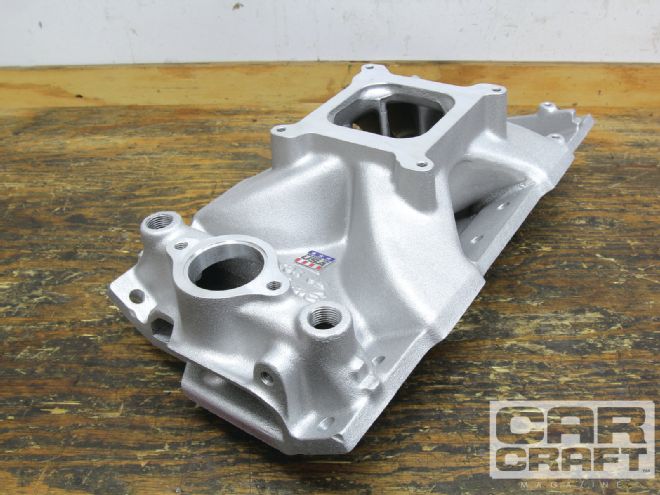 PN
2925
Price
$249.95
Peak HP
523 at 6,100
Peak TQ
506 at 4,500
Average TQ
477.4
Carb Pad Height
5.50
Plenum Depth
4.05 inches
PN
2925
Price
$249.95
Peak HP
523 at 6,100
Peak TQ
506 at 4,500
Average TQ
477.4
Carb Pad Height
5.50
Plenum Depth
4.05 inches
Weiand Team G
We divided the average torque by the carb-pad height and discovered this manifold really rocks for its height. It makes more than 500 hp yet is one of the lowest manifolds. It would probably respond well to a carb spacer if there were room under your hood.
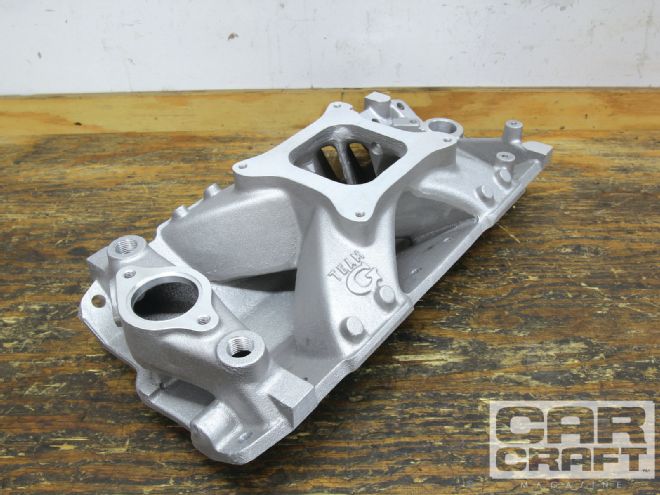 PN
7530
Price
$209.95
Peak HP
524 at 6,200
Peak TQ
507 at 4,600
Average TQ
478.4
Carb Pad Height
4.50
Plenum Depth
3.78 inches
PN
7530
Price
$209.95
Peak HP
524 at 6,200
Peak TQ
507 at 4,600
Average TQ
478.4
Carb Pad Height
4.50
Plenum Depth
3.78 inches
Edelbrock Victor Jr.
Edelbrock has probably sold more Victor Jr.'s over the years than the rest of the field combined. Despite its relatively low carb height, it offers great average torque and peak horsepower. For a car with a restricted hood line, this manifold would be a wise choice.
PN
2975
Price
$234.95
Peak HP
523 at 6,200
Peak TQ
507 at 4,700
Average TQ
479.2
Carb Pad Height
5.04
Plenum Depth
3.91 inches
Professional Products Super Hurricane
Just for the record, if you look at the results for the ProComp Shootout Pro, you'll notice they are very similar to this Professional Products Super Hurricane. That's because they are same manifold, with just slightly different part numbers.
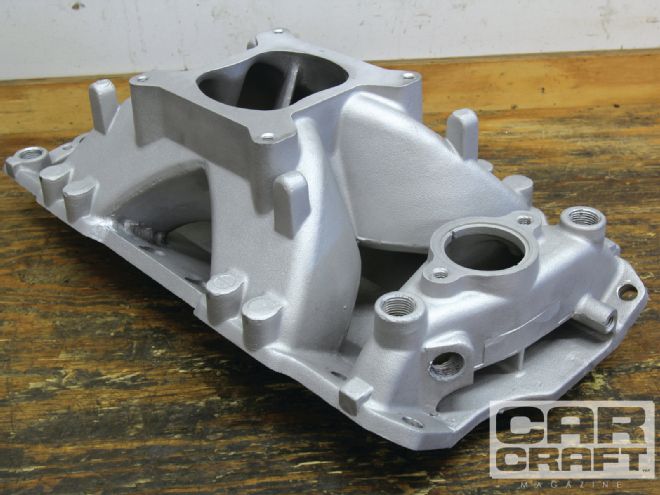 PN
52037
Price
$258.95
Peak HP
530 at 6,200
Peak TQ
504 at 4,700
Average TQ
480.2
Carb Pad Height
5.85
Plenum Depth
4.49 inches
PN
52037
Price
$258.95
Peak HP
530 at 6,200
Peak TQ
504 at 4,700
Average TQ
480.2
Carb Pad Height
5.85
Plenum Depth
4.49 inches
Summit Single-Plane
Be sure to note this manifold's place in the Average Torque Per Dollar category (page 24). This would be our dark-horse winner for "Tall Manifold That Rocks for Less Bucks." If this manifold won't fit under your hood, you've probably saved enough cash to buy a fiberglass cowl hood!
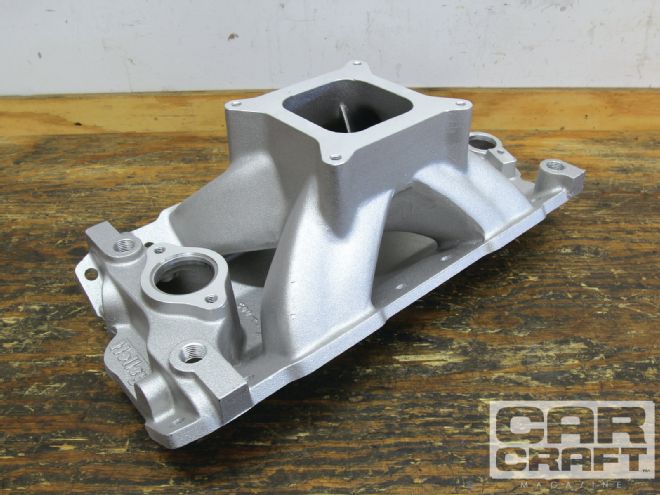 PN
226050
Price
$189.95
Peak HP
531 at 6,400
Peak TQ
507 at 4,600
Average TQ
480.5
Carb Pad Height
6.30
Plenum Depth
4.46 inches
PN
226050
Price
$189.95
Peak HP
531 at 6,400
Peak TQ
507 at 4,600
Average TQ
480.5
Carb Pad Height
6.30
Plenum Depth
4.46 inches
Brodix
The Brodix catalog lists a bewildering number of different small-block Chevy single-plane intakes, but most are specific applications or race manifolds. The HV1000 is the most popular. Average torque is solid mid-pack.
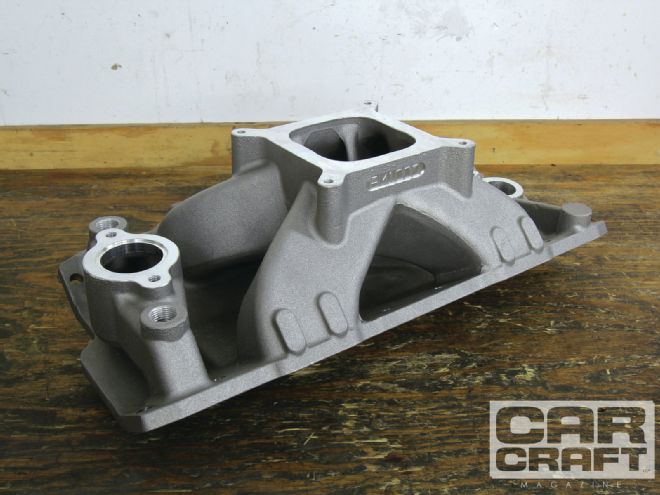 PN
HV1000
Price
$354.95
Peak HP
530 at 6,200
Peak TQ
505 at 4,600
Average TQ
481.3
Carb Pad Height
5.76
Plenum Depth
4.165
PN
HV1000
Price
$354.95
Peak HP
530 at 6,200
Peak TQ
505 at 4,600
Average TQ
481.3
Carb Pad Height
5.76
Plenum Depth
4.165
Bill Mitchell Products Motown
The Motown intake has been around for a long time yet still delivers on the average torque and decent peak horsepower.
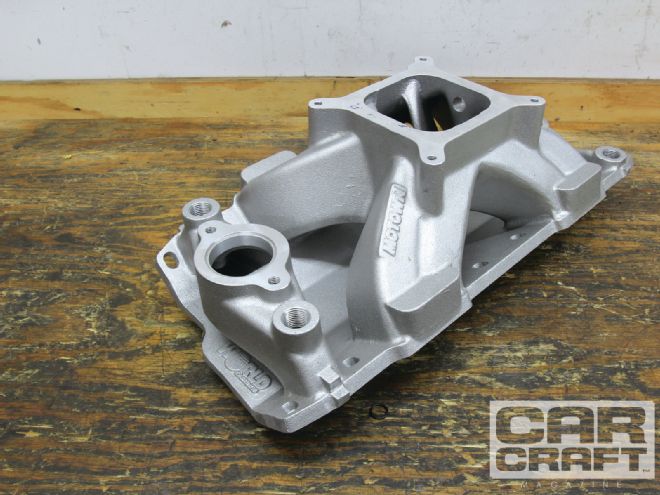 PN
061040
Price
$300.95
Peak HP
534 at 6,300
Peak TQ
508 at 4,600
Average TQ
481.5
Carb Pad Height
5.63
Plenum Depth
4.15 inches
PN
061040
Price
$300.95
Peak HP
534 at 6,300
Peak TQ
508 at 4,600
Average TQ
481.5
Carb Pad Height
5.63
Plenum Depth
4.15 inches
Professional Products Hurricane Plus
The manifold we tested was externally polished but the part number and price indicated are for the satin version.
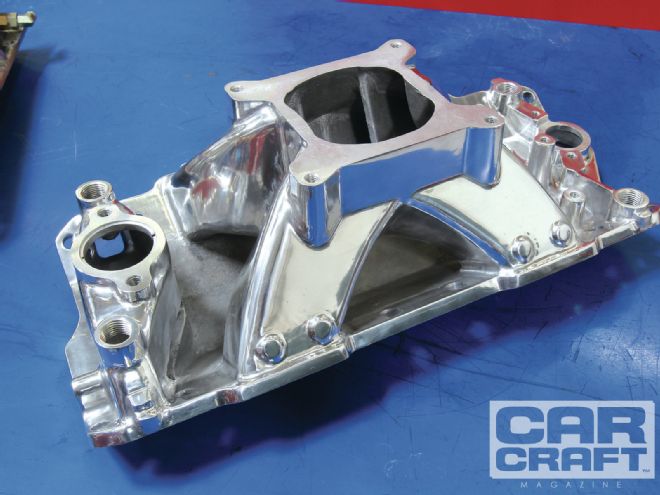 PN
52034
Price
$227.95
Peak HP
535 at 6,400
Peak TQ
506 at 4,600
Average TQ
482.9
Carb Pad Height
5.90
Plenum Depth
4.42
PN
52034
Price
$227.95
Peak HP
535 at 6,400
Peak TQ
506 at 4,600
Average TQ
482.9
Carb Pad Height
5.90
Plenum Depth
4.42
ProComp Shootout Pro
See the notes for the Professional Products Super Hurricane. The difference in average torque between all the Professional Products and ProComp Electronics manifolds is 1 percent, which is so minor as to be chalked up to casting variations and dyno-test variables.
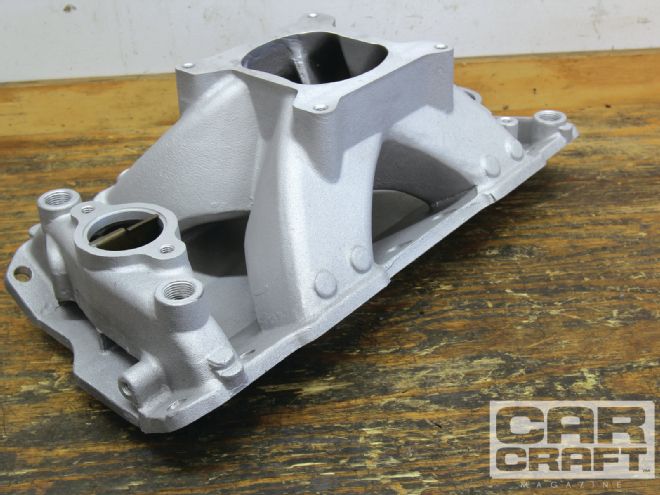 PN
22037
Price
$241.95
Peak HP
532 at 6,300
Peak TQ
508 at 4,600
Average TQ
481.8
Carb Pad Height
5.85
Plenum Depth
4.49 inches
PN
22037
Price
$241.95
Peak HP
532 at 6,300
Peak TQ
508 at 4,600
Average TQ
481.8
Carb Pad Height
5.85
Plenum Depth
4.49 inches
Dart Single-Plane
The Dart manifold produced a strong torque curve. Its rather short plenum depth indicates that it might offer crisper part-throttle performance with its smaller plenum area. Note the strong 539 peak horsepower number.
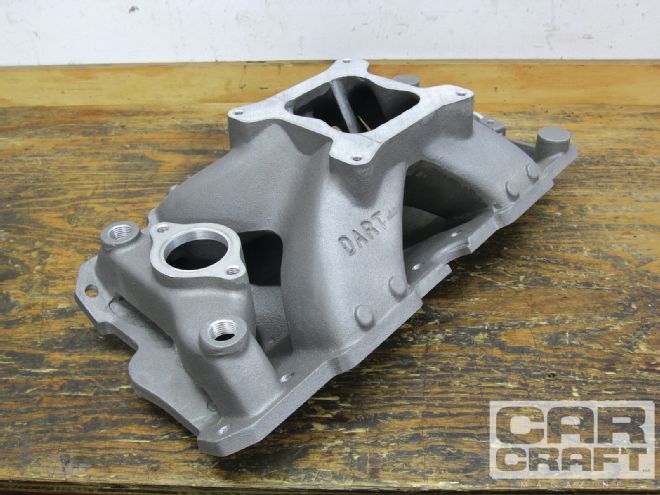 PN
42311000
Price
$423.77
Peak HP
539 at 6,300
Peak TQ
506 at 4,600
Average TQ
483.2
Carb Pad Height
5.60
Plenum Depth
3.91 inches
PN
42311000
Price
$423.77
Peak HP
539 at 6,300
Peak TQ
506 at 4,600
Average TQ
483.2
Carb Pad Height
5.60
Plenum Depth
3.91 inches
Professional Products Hurricane
It was difficult for us to tell a difference between the Hurricane, the Hurricane Plus, and the Super Hurricane manifolds. The Hurricane tested the best of the three and is the least expensive!
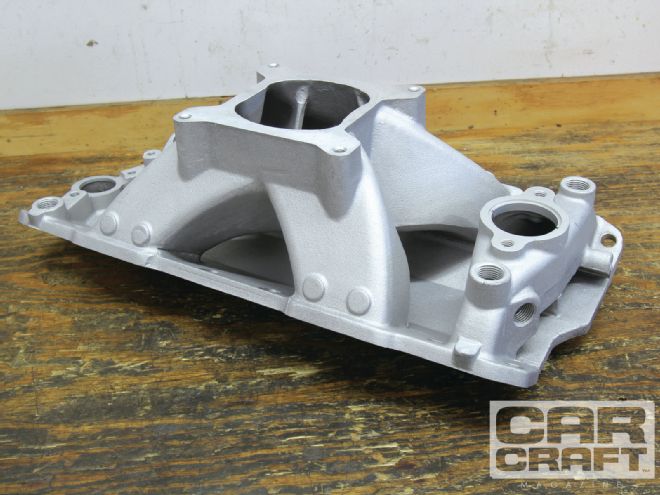 PN
52031
Price
$210.95
Peak HP
536 at 6,400
Peak TQ
511 at 4,600
Average TQ
484.9
Carb Pad Height
5.87
Plenum Depth
4.49 inches
PN
52031
Price
$210.95
Peak HP
536 at 6,400
Peak TQ
511 at 4,600
Average TQ
484.9
Carb Pad Height
5.87
Plenum Depth
4.49 inches
Wilson Ported Super Victor 23
We expected the Wilson to perform very well, but it appears that its limited height kept it from the top-horsepower brass ring. Compared with the Super Victor II, the Wilson ported Super Victor is 1.3 inches shorter in carb pad height. If cost is no object with a cast manifold, this is the place to be.
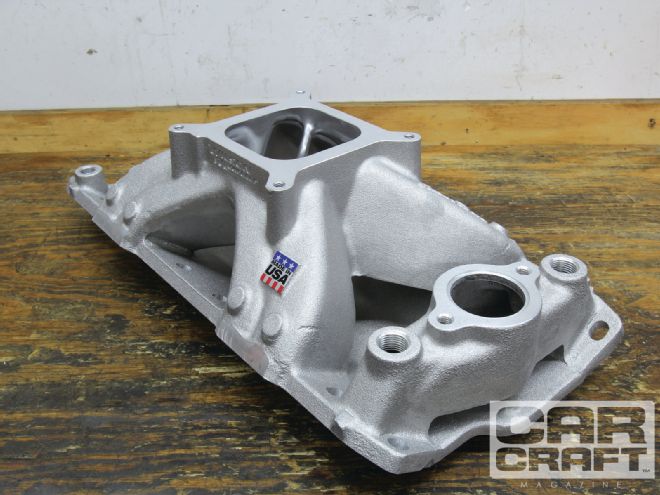 PN
128-250
Price
$901.28
Peak HP
540 at 6,300
Peak TQ
513 at 4,700
Average TQ
488.9
Carb Pad Height
5.50
Plenum Depth
4.05 inches
PN
128-250
Price
$901.28
Peak HP
540 at 6,300
Peak TQ
513 at 4,700
Average TQ
488.9
Carb Pad Height
5.50
Plenum Depth
4.05 inches
Racing Head Service
The RHS intake is unique in that it is machined for three different small-block intake patterns: the standard 23-degree small-block, the '87-and-later pattern that uses the near-vertical center bolts, and the '98-and-later Vortec 8-bolt version. This manifold is able to accommodate all three of those cylinder-head choices. Plus, the multi-point EFI version aims the injectors toward the back of the intake valve.
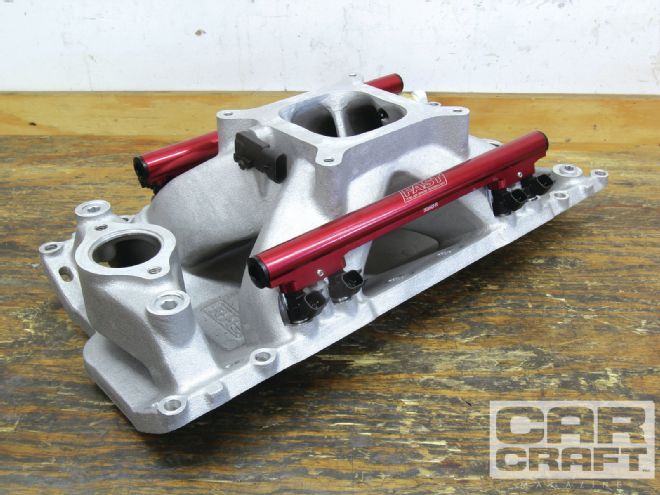 PN
12902
Price
$299.95
Peak HP
534 at 6,300
Peak TQ
511 at 4,700
Average TQ
486.0
Carb Pad Height
5.50
Plenum Depth
3.92
PN
12902
Price
$299.95
Peak HP
534 at 6,300
Peak TQ
511 at 4,700
Average TQ
486.0
Carb Pad Height
5.50
Plenum Depth
3.92
Holley Keith Dorton
This manifold was among the sleepers in this test. It produced excellent average power and good horsepower.
PN
300-110
Price
$279.95
Peak HP
538 at 6,200
Peak TQ
516 at 4,700
Average TQ
487.6
Carb Pad Height
6.10
Plenum Depth
4.80
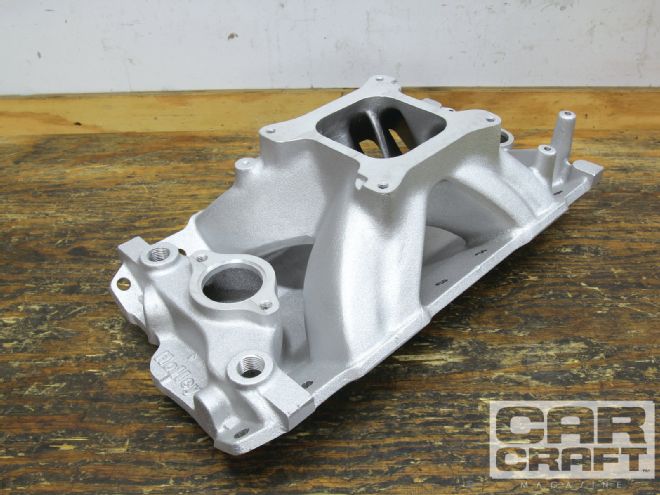
Holley Strip Dominator
The word on the street has it that the Holley Strip Dominator was a good piece, and our testing substantiates that claim. It's also among the most reasonably priced tall manifolds.
 PN
300-25
Price
$207.95
Peak HP
543 at 6,200
Peak TQ
514 at 4,700
Average TQ
488.2
Carb Pad Height
5.71
Plenum Depth
3.97 inches
PN
300-25
Price
$207.95
Peak HP
543 at 6,200
Peak TQ
514 at 4,700
Average TQ
488.2
Carb Pad Height
5.71
Plenum Depth
3.97 inches
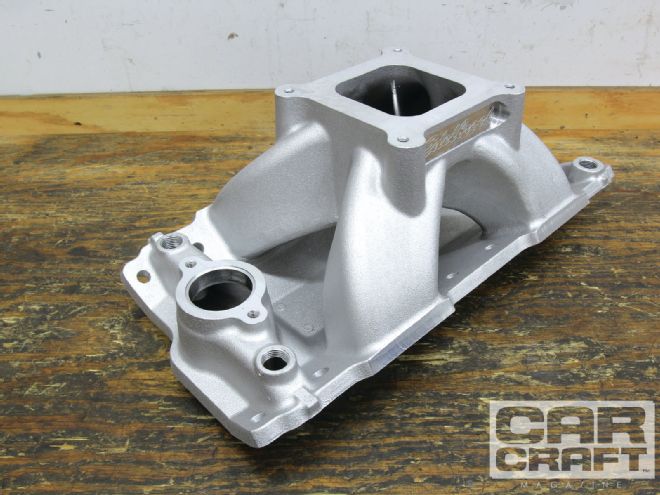
Edelbrock Super Victor II
If carb height is not a problem, there is little to dislike about the Super Victor II. Combine excellent horsepower and torque from an as-cast manifold, and you have the makings of an out-of-the-box winner. We'd like to see what Wilson could do with this manifold.
 PN
2892
Price
$379.95
Peak HP
549 at 6,300
Peak TQ
516 at 4,800
Average TQ
490.9
Carb Pad Height
6.80
Plenum Depth
4.57
PN
2892
Price
$379.95
Peak HP
549 at 6,300
Peak TQ
516 at 4,800
Average TQ
490.9
Carb Pad Height
6.80
Plenum Depth
4.57
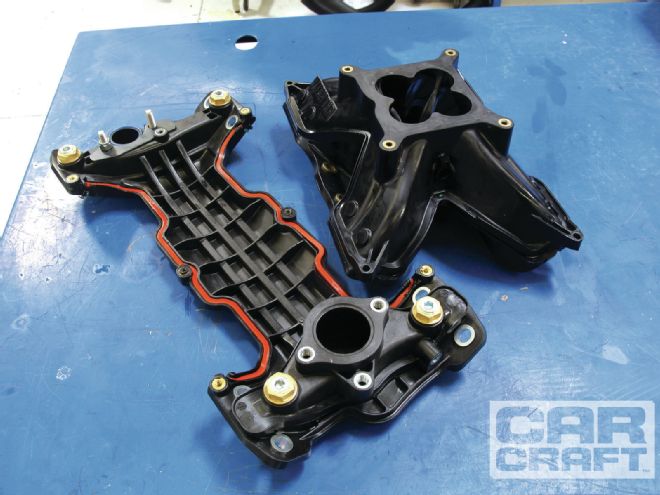
AFR Titon
The Titon is the only composite-material manifold, but it can be easily converted between two different plenums. We tested the taller of the two optional plenums, and it's still more than an inch shorter than the Edelbrock Super Victor II.
 PN
4801
Price
$581.03
Peak HP
541 at 6,300
Peak TQ
519 at 4,600
Average TQ
492.2
Carb Pad Height
5.64
Plenum Depth
4.01 inches
PN
4801
Price
$581.03
Peak HP
541 at 6,300
Peak TQ
519 at 4,600
Average TQ
492.2
Carb Pad Height
5.64
Plenum Depth
4.01 inches
Test Results
After burning through gallons of Rockett-Brand gas and more than one big tube of Permatex Ultra Grey, a few intriguing results emerged. The most obvious is that the taller the manifold, the better the overall power. Next, we were amazed at how stupid-close the results were for the mid-pack manifolds. Deal-breakers might come down to overall height or price, but from a power standpoint, the mid-pack manifolds virtually overlap. Of course, everybody wants to know the peak horsepower numbers. We expected the Edelbrock Super Victor II to do well, and it outshined all comers with 549 hp. Another bright spot was the Holley Strip Dominator, with a strong showing in average torque. We also should point out that if Made in the USA means anything, the offerings from AFR, Edelbrock, Dart, Holley/Weiand, Wilson, and World Products should carry some weight, as these companies produce their products domestically.
We have strived to make this test as accurate as possible, but it's likely that each manifold's performance could be easily influenced by our engine's specific combination of displacement, compression, cam timing, and port flow. To eliminate variables, we tried to maintain a consistent air/fuel-ratio curve for each manifold. We also ran several tests (at least three but up to five runs) on each manifold until the power stabilized and we had two similar pulls. Toward the end of the test, we also re-baselined the engine to ensure that power had not dropped off due to abuse. When our retest resulted in numbers within 2 lb-ft and 2 hp, we decided nothing had changed since those numbers are within a half-percentage point. We averaged two pulls to create one curve for each manifold. While we're on the subject of close numbers, the average-torque results reveal there are 11 manifolds in the middle of the field that are separated by a mere 8 lb-ft of torque; that's less than a 2 percent difference in average torque. We did a quick comparison of the two manifolds at the opposite ends of that spread (Holley Strip Dominator and the Professional Products Hurricane), and using our Orange Peel Chevelle as the simulated vehicle, we entered the power into the Quarter, Pro dragstrip simulation program. It spit out a difference of 0.06 second and 1 mph. If you test at the track, air quality can affect performance more than that during one day of testing. These numbers underscore just how competitive the market is for single-plane, small-block Chevy intake manifolds. Most of us wouldn't stress over four-hundredths and a half mph.
If we were to make a case for an overall choice where height is not an issue, we'd suggest looking for a manifold that placed the highest in average torque, peak horsepower, and average torque per dollar. We crunched those numbers and discovered that the Holley Strip Dominator had the consistently highest finishing position. The next four in order were the Professional Products Hurricane, Summit, Dart, and Professional Products Hurricane Plus manifolds. This may not equate to a King of the Hill award because this ranking accords equal weight to each of the three categories. Place a bias on price, and the rankings change in favor of the Summit. As we mentioned, all this information only makes the decisions more challenging. You can thank us later.
Peak Horsepower
While peak horsepower is always the go-to number, keep in mind that for a typical street car, peak horsepower is a small part of the overall power strategy. The tallest manifolds produced the most peak power and also offered some of the best average torque numbers. If we look at the manifolds that finished Second through Sixth, there is barely a 5hp difference between them. That's imperceptible in a street car. The AFR Titon and Wilson-ported Super Victor placed Third and Fourth, yet they are not overly tall manifolds. The Wilson porting job was worth 11.5 lb-ft of average torque and improved peak horsepower by 17 versus the as-cast Super Victor; that's what Wilson's Sportsman porting is worth. The Wilson's peak horsepower would improve even more with a 1-inch spacer.
Average Torque
If you could only use one factor to rate these manifolds, this would be it. What we found interesting was how the very-short Torker II manifold lived up to its name, making 19 more lb-ft than the Victor Jr. at 3,800 rpm. Also, note that in the middle of this ranking (Team G through the Hurricane), there are 10 manifolds with barely 7 lb-ft of torque between them, so it would be difficult to feel the difference in power between these intakes. The top five manifolds are covered only by a spread of 1 percent average torque.
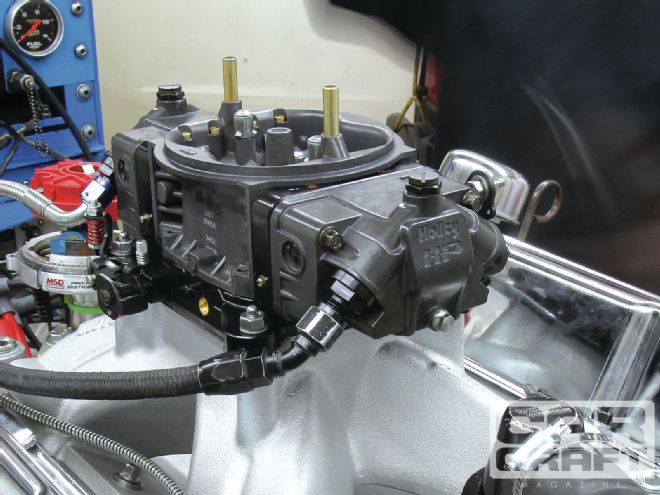 To ensure we had plenty of airflow capacity, we bolted on one of Holley’s new 850-cfm Ultra HP carburetors for our test. This is one of the black anodized versions. The carburetor is slightly longer with greater fuel-capacity bowls, and the fuel fitting sizes in the bowls have also changed.
Ranking
Average TQ
1st
AFR Titon
492.2
2nd
Edelbrock Super Victor II
490.9
3rd
Wilson ported Super Victor
488.9
4th
Holley Strip Dominator
488.2
5th
Holley Dorton
487.6
6th
RHS
486.0
7th
Pro Products Hurricane
484.9
8th
Dart
483.2
9th
Pro Products Hurricane Plus
482.9
10th
ProComp Shootout Pro
481.8
11th
World Products Motown
481.5
12th
Brodix HV1000
481.3
13th
Summit
480.5
14th
Pro Products Super Hurricane
480.2
15th
Edelbrock Victor Jr.
479.2
16th
Holley Team G
478.4
17th
Edelbrock Super Victor 23
477.4
18th
Edelbrock Torker II
466.5
19th
Weiand X-CELerator
472
To ensure we had plenty of airflow capacity, we bolted on one of Holley’s new 850-cfm Ultra HP carburetors for our test. This is one of the black anodized versions. The carburetor is slightly longer with greater fuel-capacity bowls, and the fuel fitting sizes in the bowls have also changed.
Ranking
Average TQ
1st
AFR Titon
492.2
2nd
Edelbrock Super Victor II
490.9
3rd
Wilson ported Super Victor
488.9
4th
Holley Strip Dominator
488.2
5th
Holley Dorton
487.6
6th
RHS
486.0
7th
Pro Products Hurricane
484.9
8th
Dart
483.2
9th
Pro Products Hurricane Plus
482.9
10th
ProComp Shootout Pro
481.8
11th
World Products Motown
481.5
12th
Brodix HV1000
481.3
13th
Summit
480.5
14th
Pro Products Super Hurricane
480.2
15th
Edelbrock Victor Jr.
479.2
16th
Holley Team G
478.4
17th
Edelbrock Super Victor 23
477.4
18th
Edelbrock Torker II
466.5
19th
Weiand X-CELerator
472
Average Torque Per Dollar
Next, we combined the two most important test criteria to rate how the average power was affected by price. Think carefully here, because the least expensive manifold is not necessarily the best buy; for example, the top two manifolds here are the worst in terms of overall power. Assuming power trumps price, then the Summit manifold really shines, as it placed mid-pack in average torque and is attractively priced at only $189.95, making 2.53 lb-ft of torque for every dollar spent. The next best manifold is the Holley Strip Dominator, which made more torque but costs an additional $30. At the bottom of the category are the Wilson and AFR manifolds with fractional numbers because their cost is higher than their average torque.
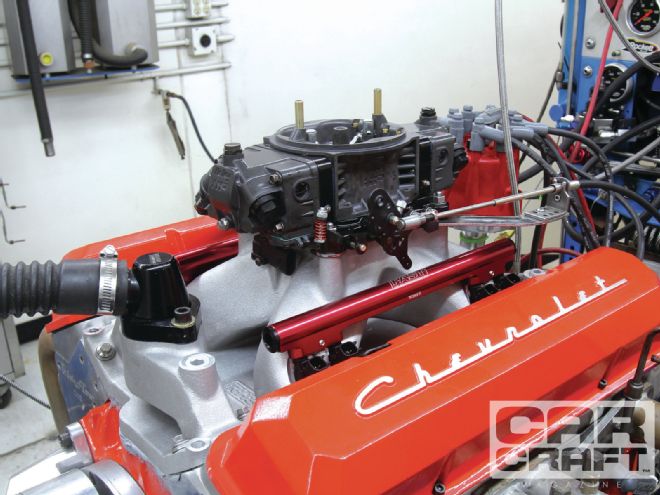 We managed to convince RHS to let us test one of the very first, new single-plane RHS manifolds off the assembly line, which happened to be an EFI version. RHS bolted injectors and a fuel rail in place to seal the holes that allowed us to use the carburetor.
Ranking
Average TQ/$
1st
Edelbrock Torker II
3.11
2nd
Weiand X-CELerator
2.84
3rd
Summit
2.53
4th
Holley Strip Dominator
2.34
5th
Pro Products Hurricane
2.29
6th
Weiand Team G
2.27
7th
Pro Products Hurricane Plus
2.11
8th
Edelbrock Victor Jr.
2.04
9th
Pro Comp Shootout Pro
1.99
10th
Edelbrock Super Victor 23
1.91
11th
Pro Products Super Hurricane
1.85
12th
Holley Dorton
1.74
13th
RHS
1.62
14th
World Products Motown
1.60
15th
Brodix HV1000
1.35
16th
Edelbrock Super Victor II
1.29
17th
Dart
1.14
18th
AFR Titon
0.84
19th
Wilson
0.54
We managed to convince RHS to let us test one of the very first, new single-plane RHS manifolds off the assembly line, which happened to be an EFI version. RHS bolted injectors and a fuel rail in place to seal the holes that allowed us to use the carburetor.
Ranking
Average TQ/$
1st
Edelbrock Torker II
3.11
2nd
Weiand X-CELerator
2.84
3rd
Summit
2.53
4th
Holley Strip Dominator
2.34
5th
Pro Products Hurricane
2.29
6th
Weiand Team G
2.27
7th
Pro Products Hurricane Plus
2.11
8th
Edelbrock Victor Jr.
2.04
9th
Pro Comp Shootout Pro
1.99
10th
Edelbrock Super Victor 23
1.91
11th
Pro Products Super Hurricane
1.85
12th
Holley Dorton
1.74
13th
RHS
1.62
14th
World Products Motown
1.60
15th
Brodix HV1000
1.35
16th
Edelbrock Super Victor II
1.29
17th
Dart
1.14
18th
AFR Titon
0.84
19th
Wilson
0.54
Carb Pad Height
This is a simple evaluation: The manifold will either fit under your hood or it won't. The carb pad height measurement is the distance from the carb-mounting pad to the bottom of the rear china wall where the manifold seals to the block. If you already have an engine in the car, you can measure your manifold and compare that height with any of the manifolds tested here. One technique to check fitment is to place a lump of soft clay on top of the air cleaner at the closest point to the hood. Then close the hood carefully and measure the height of the compressed clay to determine the clearance. An interesting result here is how well the Weiand Team G and Victor Jr. manifolds performed, considering their attenuated height.
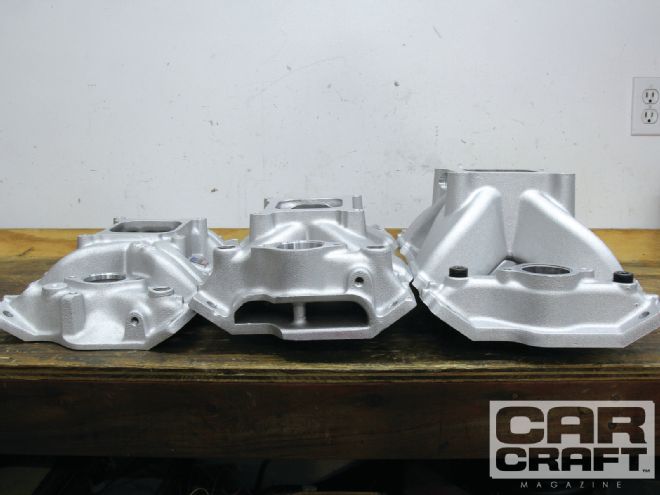 A quick cue to how well a manifold will perform is simple carburetor height. A taller carb position creates a larger plenum that allows a gentler radius for the heavier fuel to make the transition from vertical flow out of the carburetor to horizontal flow into the intake ports.
Manifold
Carb Pad Height
Weiand X-CELerator
4.00
Weiand Team G
4.50
Edelbrock Torker II
4.55
Edelbrock Victor Jr.
5.04
Wilson Ported Super Victor
5.50
Edelbrock Super Victor
5.50
RHS
5.50
Dart
5.60
World Products Motown
5.63
AFR Titon
5.64
Holley Strip Dominator
5.71
Brodix HV1000
5.76
Pro Comp Shootout Pro
5.85
Pro. Products Super Hurricane
5.85
Pro Products Hurricane 52031
5.87
Pro Products Hurricane Plus
5.90
Holley Dorton
6.10
Summit
6.30
Edelbrock Super Victor II
6.85
A quick cue to how well a manifold will perform is simple carburetor height. A taller carb position creates a larger plenum that allows a gentler radius for the heavier fuel to make the transition from vertical flow out of the carburetor to horizontal flow into the intake ports.
Manifold
Carb Pad Height
Weiand X-CELerator
4.00
Weiand Team G
4.50
Edelbrock Torker II
4.55
Edelbrock Victor Jr.
5.04
Wilson Ported Super Victor
5.50
Edelbrock Super Victor
5.50
RHS
5.50
Dart
5.60
World Products Motown
5.63
AFR Titon
5.64
Holley Strip Dominator
5.71
Brodix HV1000
5.76
Pro Comp Shootout Pro
5.85
Pro. Products Super Hurricane
5.85
Pro Products Hurricane 52031
5.87
Pro Products Hurricane Plus
5.90
Holley Dorton
6.10
Summit
6.30
Edelbrock Super Victor II
6.85
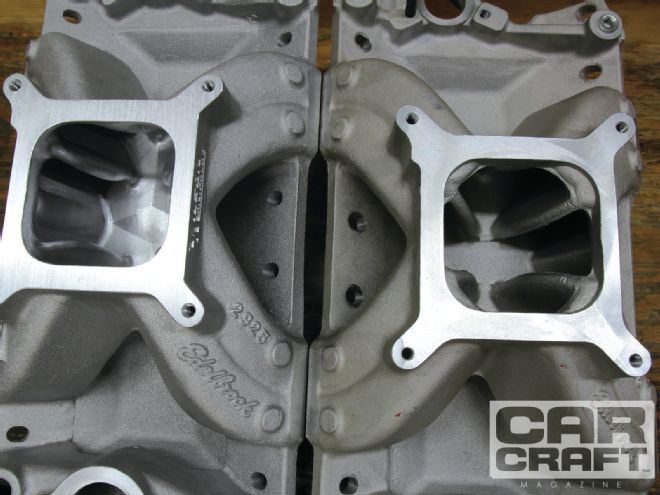 Here’s a look at the Wilson Sportsman porting (left) versus the stock Super Victor. Appearances are deceiving, because the porting is worth 17 hp.
Parts List
Description
PN
Source
Price
TFS 215cc heads
32400007
Summit Racing
$1,449.95
Crane roller cam
118741
Summit Racing
400.00
Crane roller lifters
11519-16
Summit Racing
428.80
Crane timing set
11976-1
Summit Racing
141.20
Crane pushrods
95635-16
Summit Racing
156.80
Crane thrust button
99164-1
Summit Racing
14.00
Crane roller rockers
11755-16
Summit Racing
395.20
Fel-Pro head gasket
1143
Summit Racing
88.95 (2)
Fel-Pro intake gasket
1206
Summit Racing
16.95
MSD crank trigger
8615
Summit Racing
255.95
MSD distributor
85551
Summit Racing
235.95
MSD plug wires
31229
Summit Racing
84.95
Autolite spark plugs
AR3933 (8)
Summit Racing
28.00
ARP head bolts
134-3701
Summit Racing
84.28
ARP intake bolts
434-2001
Summit Racing
33.70
Permatex Ultra Gr.
82194
Local Auto Parts
7.49
Here’s a look at the Wilson Sportsman porting (left) versus the stock Super Victor. Appearances are deceiving, because the porting is worth 17 hp.
Parts List
Description
PN
Source
Price
TFS 215cc heads
32400007
Summit Racing
$1,449.95
Crane roller cam
118741
Summit Racing
400.00
Crane roller lifters
11519-16
Summit Racing
428.80
Crane timing set
11976-1
Summit Racing
141.20
Crane pushrods
95635-16
Summit Racing
156.80
Crane thrust button
99164-1
Summit Racing
14.00
Crane roller rockers
11755-16
Summit Racing
395.20
Fel-Pro head gasket
1143
Summit Racing
88.95 (2)
Fel-Pro intake gasket
1206
Summit Racing
16.95
MSD crank trigger
8615
Summit Racing
255.95
MSD distributor
85551
Summit Racing
235.95
MSD plug wires
31229
Summit Racing
84.95
Autolite spark plugs
AR3933 (8)
Summit Racing
28.00
ARP head bolts
134-3701
Summit Racing
84.28
ARP intake bolts
434-2001
Summit Racing
33.70
Permatex Ultra Gr.
82194
Local Auto Parts
7.49
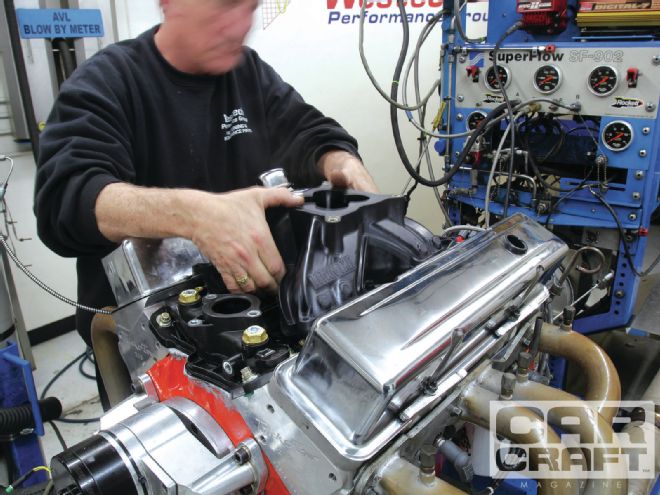 One of the great-performing intakes is the AFR two-piece composite, which is not particularly tall but made the most average torque and still made 541 hp. AFR offers tapered spacers and an open-plenum spacer that would add perhaps another 5 hp.